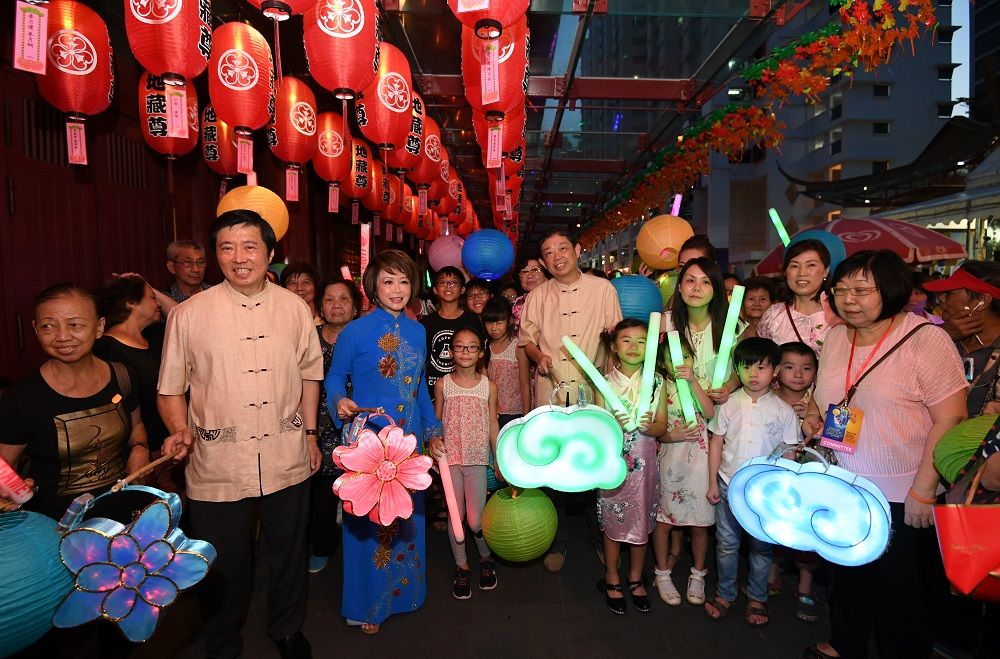
On March 3, coinciding with the fifteenth day of the first lunar month, Taiwan erupts into the vibrant splendor of the Lantern Festival, a millennia-old celebration pulsing with reunion, blessings, and the warding off of misfortune. Streets transform into rivers of light as massive lantern displays illuminate the night: Taipei’s grand festival unfurls colossal lanterns riddled with riddles that tease the mind and spark joy; Yilan’s international children’s lantern event weaves playful illuminations with indigenous motifs; while sky lanterns drift heavenward in Taichung, carrying handwritten wishes on whispers of wind. Families gather around steaming bowls of glutinous rice balls—sweet or savory orbs symbolizing wholeness and harmony—savoring their chewy embrace as a tender nod to unity in a fragmented world. This festival, rooted in Han Dynasty lore over two thousand years ago, crowns the Lunar New Year with its full moon’s promise of celestial perfection, fusing Han, Hakka, Hoklo, and indigenous threads into a tapestry of shared heritage that draws millions annually into a symphony of flickering flames and festive laughter.
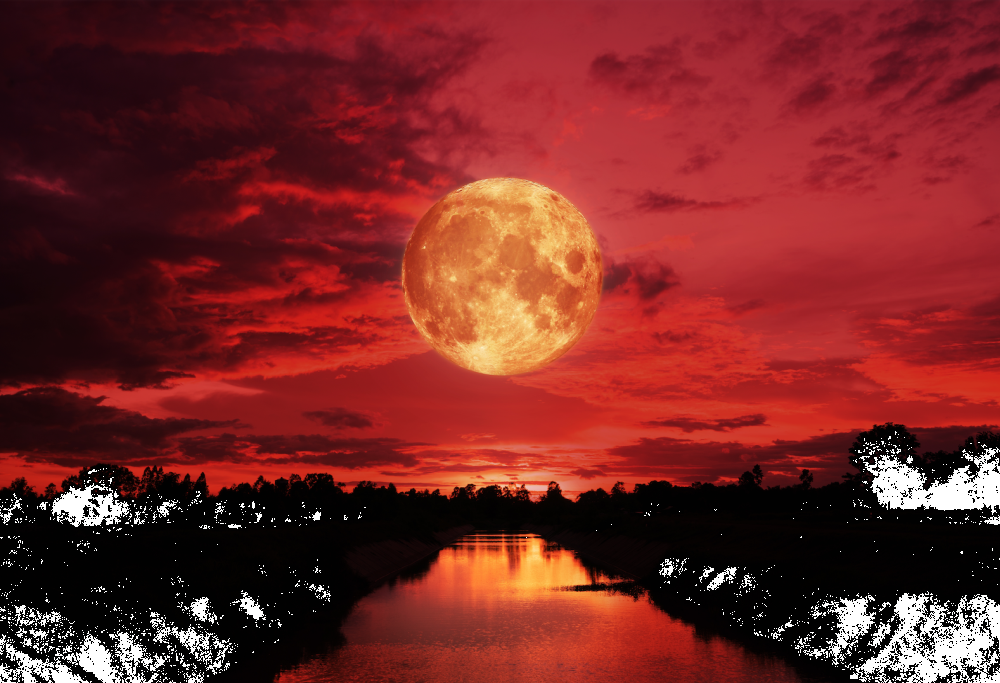
Yet this year, the heavens conspire for an exquisite rarity: the Lantern Festival’s luminous full moon morphs into a blood moon during a total lunar eclipse, the only one visible worldwide in 2026 and fully observable across Taiwan. As the Central Weather Administration notes, the spectacle ignites at 5:50 PM when the moon rises already nibbled at the edge, plunging into full eclipse from 7:04 PM to 8:03 PM, its surface bathed in an eerie crimson hue from sunlight refracted through Earth’s atmosphere—like a cosmic lantern painted in the blood of ancient myths. Peaking at 7:34 PM with a maximum obscuration of 1.024, the 59-minute totality casts a coppery veil over the night, turning the festival’s glowing orbs into earthly echoes of the sky’s drama. Such alignments are whispers from the stars; in this century, Taiwan witnesses only a handful of eclipses kissing the fifteenth lunar night, with the next full eclipse chase lingering nearly three years away.
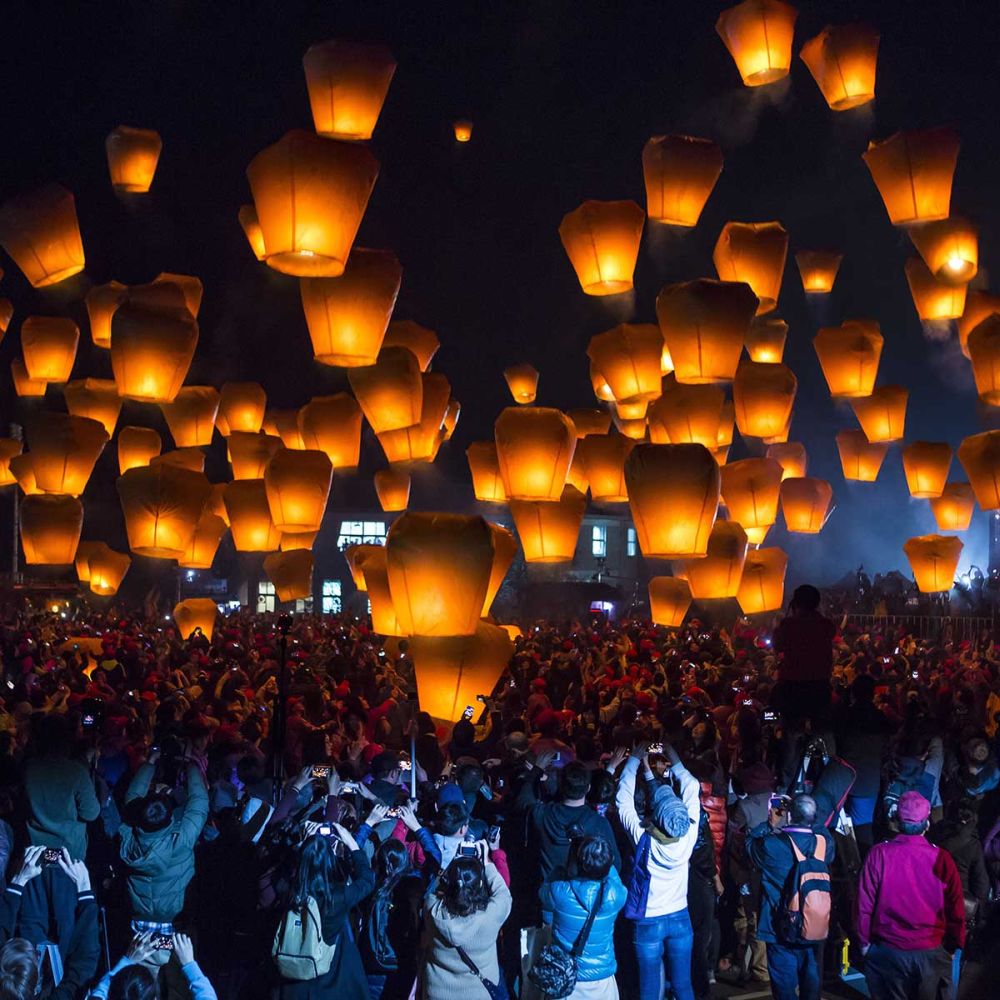
Imagine it: riddle-solving crowds pause mid-guess, faces upturned to the reddening orb, as sky lanterns ascend to greet their eclipsed kin. Taipei Astronomical Museum’s director likens it to rebirth amid reunion, a poetic fusion where folklore meets astrophysics. For the best views, seek eastern horizons free of urban clutter—eastern Taiwan’s Yilan and Hualien promise clearest skies under partly cloudy northern forecasts. No telescope required; the naked eye feasts on the drama, though binoculars unveil lunar seas in scarlet splendor. The museum itself hosts free evening viewings from 5:30 PM to 9:30 PM, blending live streams, guided tours, and festival flair for families to riddle, dine, and gaze in one enchanted evening.
In our hurried epoch, the Lantern Festival anchors us to rituals of light and longing, now amplified by this blood moon’s primal allure; a divine flourish urging us skyward with wishes anew. As lanterns bob and the moon bleeds red, Taiwan’s night becomes a bridge between earthly traditions and the universe’s grand theater, etching 2026 into memory as a festival forever touched by the stars.
Images : web
Text : Scribblegeist (Ghost of the runaway pencil)