This spring, the headlines have been a broken record – literally. Taiwan sizzles under record highs. Europe swelters like a sauna left on overnight. From Taipei to Toulouse, people are fanning themselves, chugging iced tea, and asking the same question: “Just how hot is it, exactly?” But imagine, for a moment, a world with no thermometers. No °C, no °F. Just you, the sun, and your best guess: “Mild.” “Toasty.” “My sandals are melting – definitely ‘very hot.’”?? Not very scientific. And certainly not something you could argue about on social media. So thank goodness for two very determined, slightly obsessive gentlemen from the 18th century: a Swede who loved astronomy, and a German who loved mercury.
Let’s meet them.
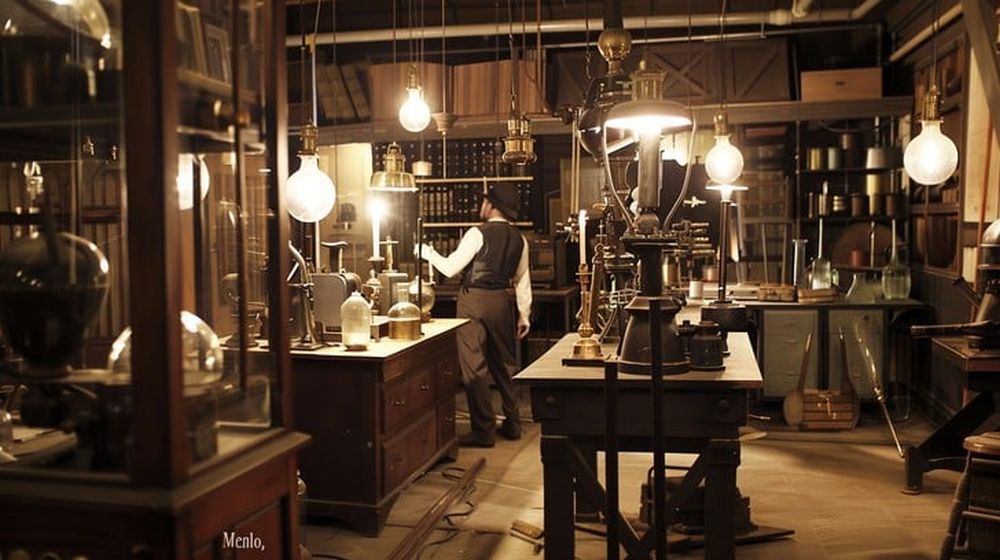
🌡️ Anders Celsius : The Upside-Down Genius
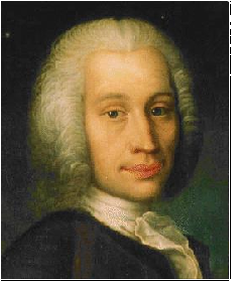
Anders Celsius was a Swedish astronomer with a problem. He needed a reliable way to measure temperature that didn’t rely on words like “nippy” or “sweltering.” So in 1742, he invented a scale with 100 easy steps.
But here’s the funny part : he put 0° at the boiling point of water and 100° at freezing. Yes, his thermometer ran backwards. Water boiled at “zero.” Ice formed at “one hundred.” Why? He wanted to avoid negative numbers in cold climates (very Swedish of him). But after he died, his colleague Carl Linnaeus; the same guy who organized all of living nature into neat categories; looked at the upside-down scale and said, “No, Carl, just… flip it.” And so they did. The scale was called “centigrade” (Latin for “hundred steps”) until 1948, when scientists officially renamed it Celsius in his honor. And that’s why your weather app doesn’t show boiling water at 0° today. You’re welcome.
🌡️ Daniel Fahrenheit : The Brine Enthusiast
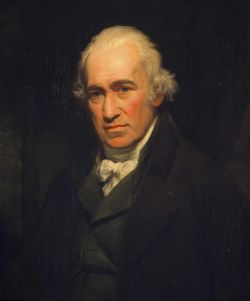
Meanwhile, in Poland and Germany, a physicist named Daniel Gabriel Fahrenheit was doing something even stranger. He wanted a thermometer so precise that he could mark degrees by simply dividing the glass tube in half , again and again.
To find his zero point, he didn’t use water. He used a brine slush : a freezing mix of ice, water, and ammonium chloride. Why brine? Because it gets colder than pure ice, and Fahrenheit was chasing the coldest stable temperature he could make in his lab. (His neighbors must have wondered why the weird scientist kept ordering salt by the barrel.) He set that brine’s freezing point as 0°F. Then he set water’s freezing point at 32°F; a nice, even number that’s divisible by 2, 4, 8, and 16. Why? Because he could bisect the interval between 0 and 32 six times to make precise marks on his glass tubes. Genius, if a little obsessive.
Later, the scale was tweaked so water boils at 212°F. And the name? Fahrenheit stuck, because “the brine-and-bisection scale” never quite caught on.
🧮 The Not-So-Secret Formulas (Because Math Is Cooler Than Brine)
Now, if you live in Taiwan (where weather reports use Celsius) but you read a European headline saying “38°C in Paris,” you might wonder: How hot is that in Fahrenheit?
Here’s the magic pair of formulas:
From Celsius to Fahrenheit:
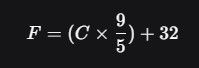 *Example: 100°F − 32 = 68, times 5/9 ≈ 37.8°C. Fever territory.*
From Fahrenheit to Celsius:
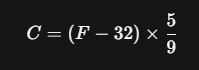
*Example: 100°F − 32 = 68, times 5/9 ≈ 37.8°C. Fever territory.*
And for the scientists (or anyone who really misses winter):
Kelvin = Celsius + 273.15. Because why stop at two scales?
🌍 So This Spring, as the Mercury Rises…
…remember that behind every “record high” is a fascinating story of Swedish astronomers who liked things backwards, German physicists who loved salty ice, and a whole lot of human effort to replace “gosh, it’s warm” with “31.4°C, 52% humidity, feels like 38°C.” So go ahead, check your thermometer, impress a friend with the Celsius-Fahrenheit conversion, and thank Anders and Daniel the next time you complain about the heat. Just don’t ask them to agree on what “room temperature” means. That’s a fight for another day.

Stay cool, stay curious, and remember: 0°C is freezing, 100°C is boiling, and anywhere in between is just a math problem away. 😄
Images : AI Generated, Web, Wiki
Text : Scribblegeist (Ghost of the runaway pencil)