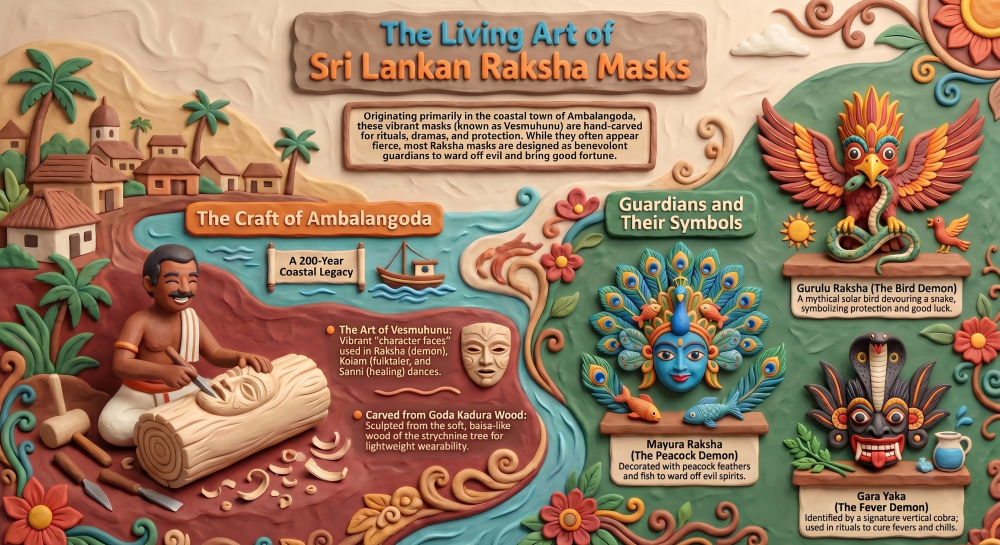
The traditional ceremonial masks of Sri Lanka, commonly known as Vesmuhunu or “character faces,” hold a deeply important place in the island’s cultural identity. For more than two centuries, these vivid and expressive masks have played a central role in rituals, dramas, and coastal performances, blending spiritual meaning with striking visual artistry. Scholars generally divide them into three main groups: Raksha (Demon) masks used for protection and festivals, Kolam (Folktale) masks featured in satirical theater, and Sanni (Devil Dance) masks associated with healing rituals and exorcisms. Together, they form a powerful visual tradition filled with bright colors, animalistic forms, and symbolic imagery rooted in myth and communal life.
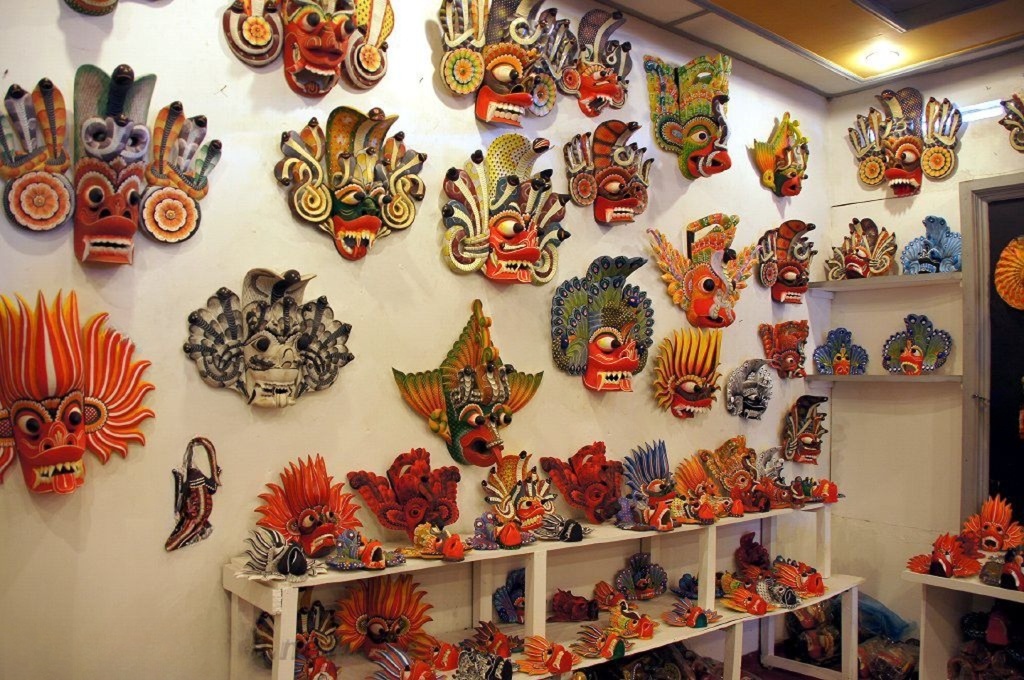
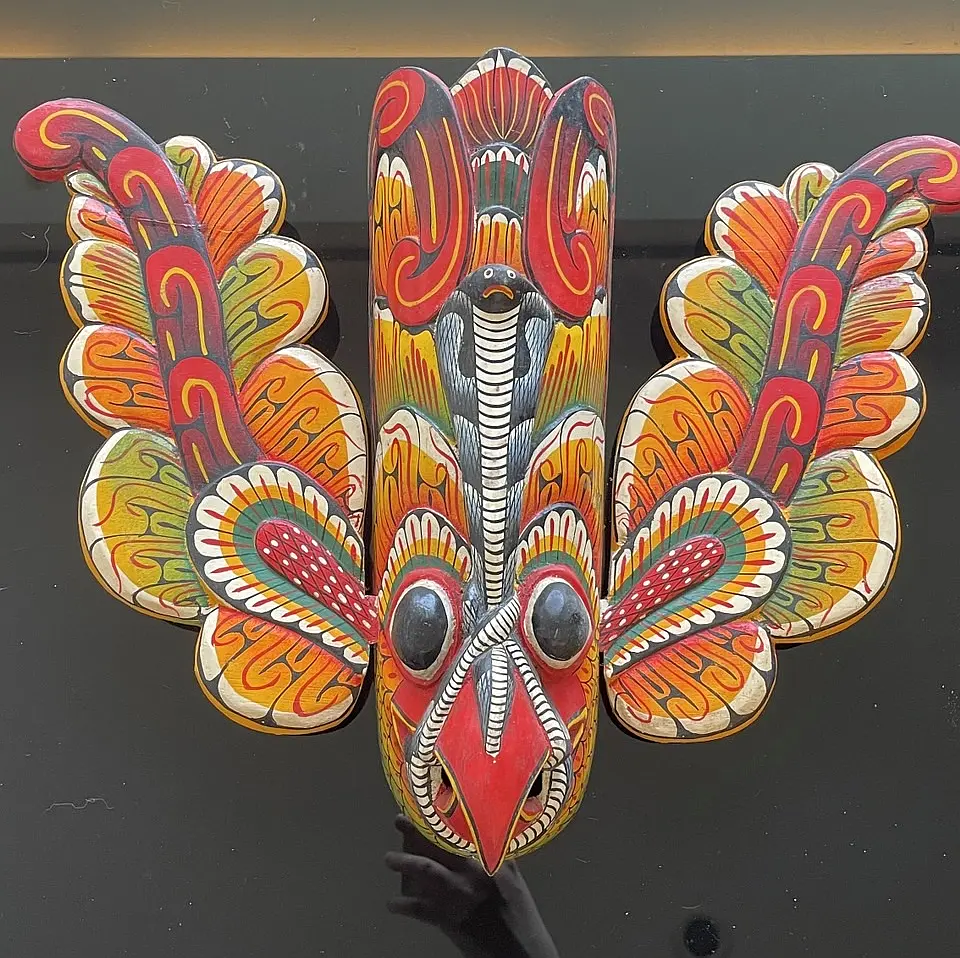
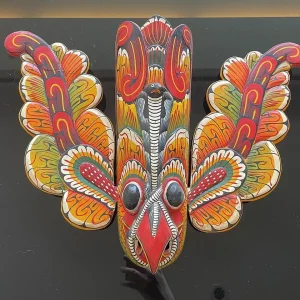 Among the most iconic of these figures is the Gurulu Raksha, the portrait of a mythical solar bird that occupies a significant place in Hindu and Buddhist cosmology as the vehicle of the God Vishnu. In the hand-carved manifestations of this demon, the visual symbolism is both violent and protective, encapsulating the eternal rivalry between the avian Garuda and the reptilian Naga. Unlike simpler interpretations, the forensic iconography of the mask reveals a Naga motif that runs down the vertical center of the face, decorated with enemy snakes as if they were a trophy of conquest. The palette of the Gurulu Raksha—dominated by vivid reds, oranges, and yellows—reinforces its solar associations and its reputation for bringing good luck. This interplay of avian and reptilian themes creates a bridge to other variations of the Raksha tradition, where different animal spirits are summoned for their specific guardian properties. (Private Collection)
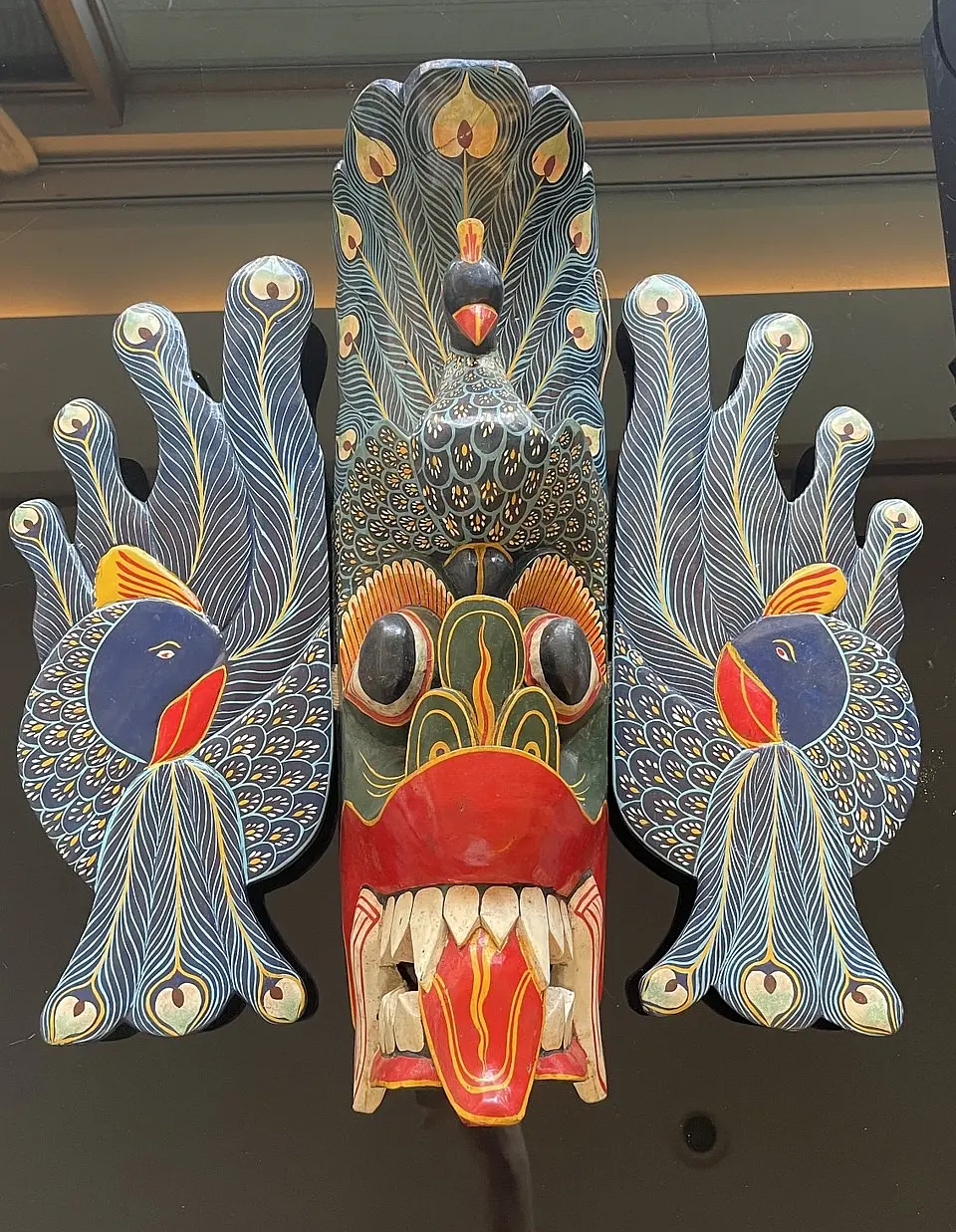
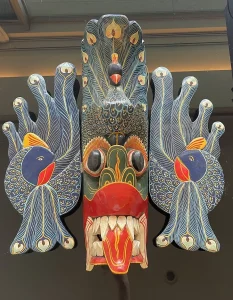 The Mayura Raksha, or Peacock Demon, provides a striking aesthetic contrast through its lush blue-green palette and the elaborate peacock-eye feather patterning that extends across its flanking wings. This mask type is a masterclass in symbolic synthesis, frequently incorporating fish figures on the sides and fierce, open jaws lined with teeth to create a countenance that is simultaneously beautiful and terrifying. This dualism is central to the mask’s function; the fierce appearance is not a representation of malice but a strategic tool used to chase away malevolent influences. Whether categorized as a Mayura or the closely related Naga Raksha (Cobra Demon), these polychromatic pieces demonstrate how guardian beliefs are externalized through craftsmanship. Yet, to truly understand the ontological status of these objects, one must look beyond the pigment to the raw material and the forensic evidence of the carving process itself. (Private Collection)
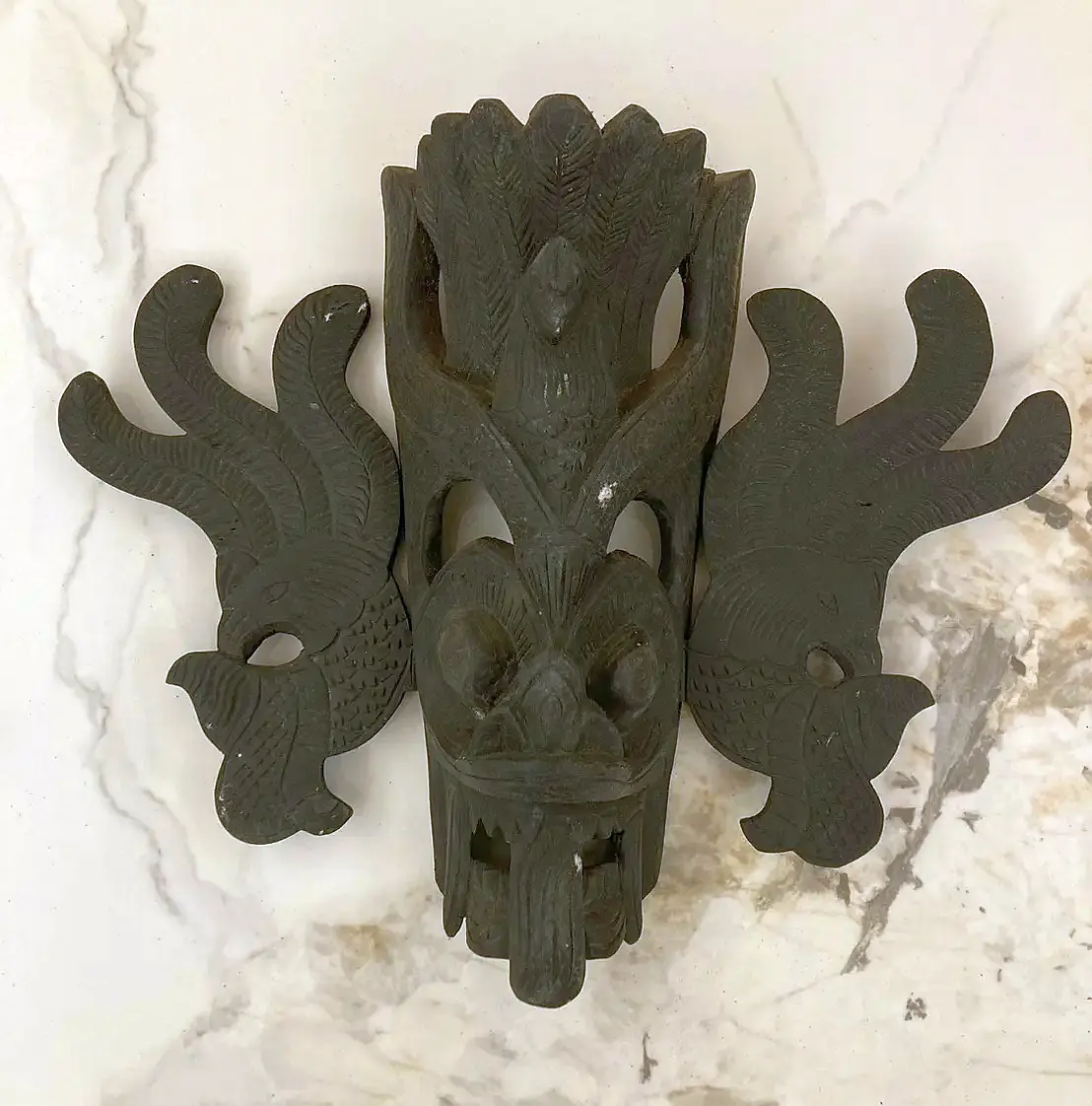
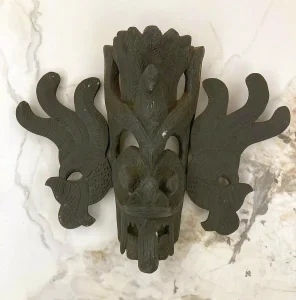 A study of the unpainted Raksha mask offers an invaluable window into the technical and historical foundations of the craft, where the absence of color highlights the structural continuity of the tradition. In these raw or antique forms, the flanking wing-like extensions and central, toothy maws reveal the hand of the master carver without the distraction of paint. The presence of a dark patina on such pieces often serves as an indicator of significant age, suggesting a status as an original carving that predates contemporary finishing techniques. By analyzing these “raw” forms, the material science of the tradition becomes clear: the reliance on goda kadura, the timber of the strychnine tree (Strychnos nux-vomica). This soft, balsa-like wood is prized for its light weight and workability, though the tree itself is known for its toxic properties—a fittingly potent material for the creation of spiritual protectors. (Private Collection)
The geographic and historical roots of this craft are inextricably linked to the botanical availability of goda kadura along the island’s southern reaches. Tracing its origins back over two hundred years, the tradition likely migrated from the South Indian state of Kerala before taking permanent root in the low-country coastal communities. The towns of Ambalangoda, Mirissa, and Pokunuwita emerged as the primary centers of excellence, where raw timber was transformed into spiritual guardians. These coastal hubs served as the workshops where the wood was seasoned and carved, ready to be animated through the rhythmic intensity of traditional performance in the liminal spaces of the village ritual ground.
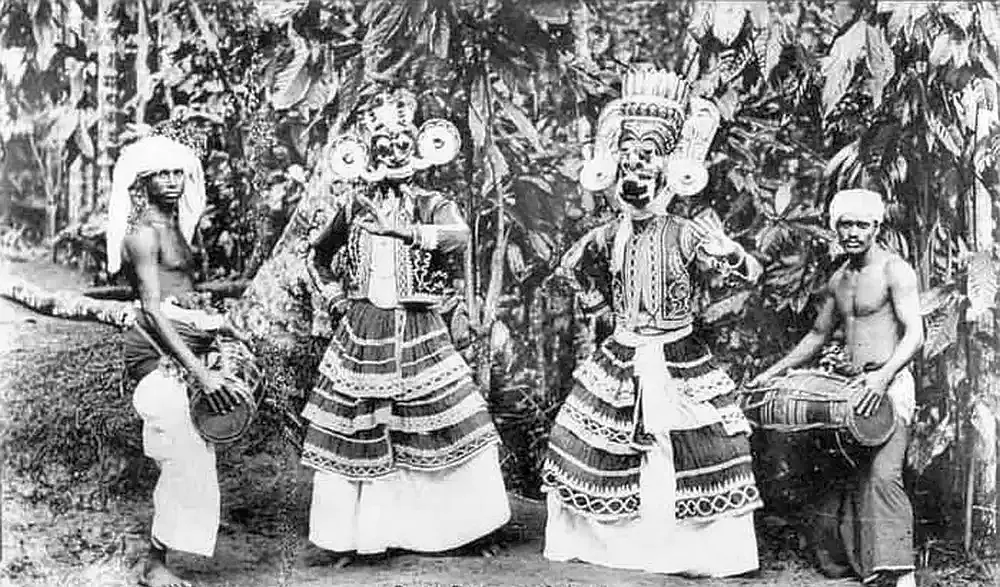
These masks are brought to life within a complex ritual landscape, most notably during community health ceremonies known as the Sanni Yakuma. While the Raksha masks primarily serve festivals and general protection, they share a spiritual ethos with the Sanni tradition, which addresses specific ailments through exorcism. A prominent example is the Gara Yaka, one of the eighteen main Sanni demons. Recognizable by its signature vertical cobra icon, the Gara Yaka is strategically invoked to treat the spiritual causes of fevers and chills. In historical practice, “Devil Dancers” would don these heavy wooden faces, their movements punctuated by the resonance of drums and the visual blur of layered, tiered skirts. In these rituals, the mask is never a static object of art; it is a functional participant in a traditional drama designed to restore balance to the community through the performative expulsion of disease.
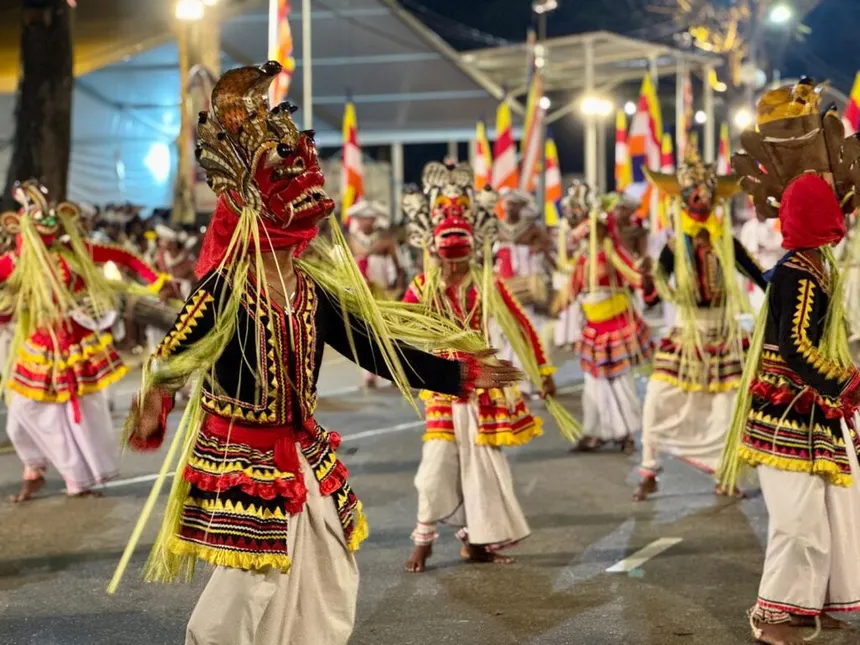
Today, the Raksha tradition remains a vital and active component of Sri Lankan society, bridging the gap between ancient legend and modern cultural performance. From the specialized workshops of Ambalangoda to prestigious international collections, these character faces continue to be valued as high-status artifacts and enduring protective symbols of the Southern Province. They remain active guardians of folklore, proving that the synthesis of raw timber, toxic strychnine wood, and spiritual intent maintains a profound relevance in the contemporary world. Ultimately, these masks are far more than mere wood and pigment; they represent the living spirit of a culture that continues to find its most powerful protection in the expressive faces of its demons.
Toxic wood, timeless spirit;
sometimes the best protection comes
with a little poison.
Images : Private Collection (When explicitely mentioned), AI Generated, Web
Text : Scribblegeist (Ghost of the runaway pencil)