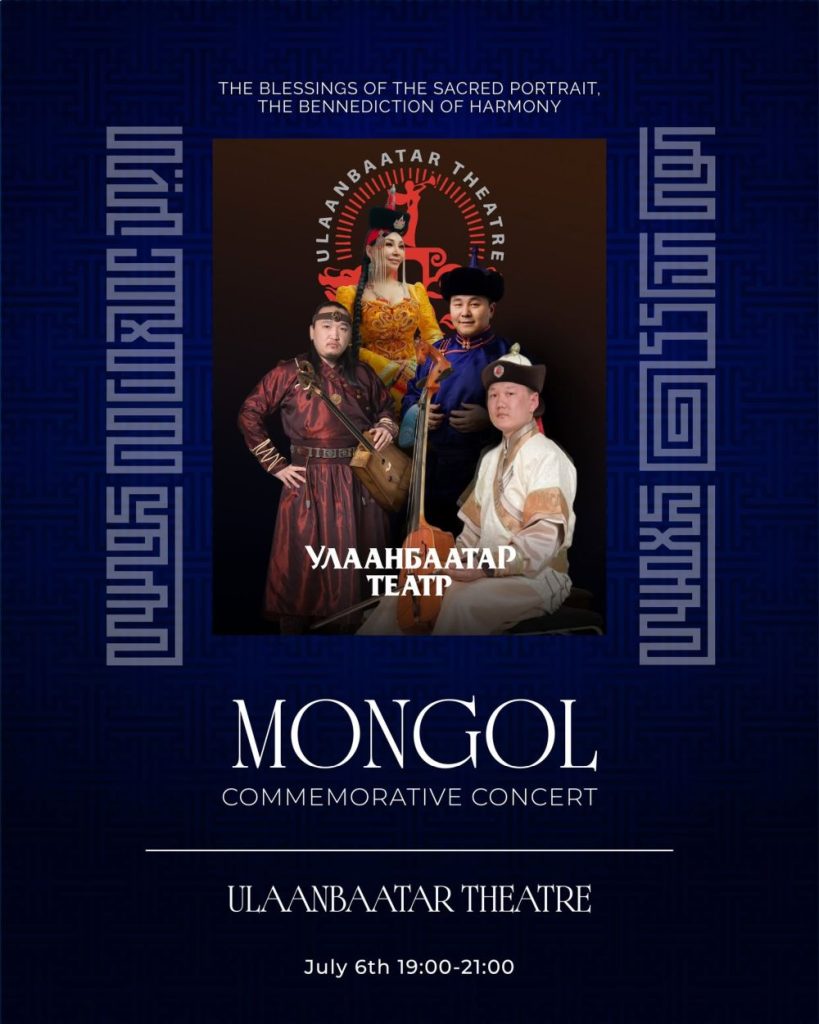
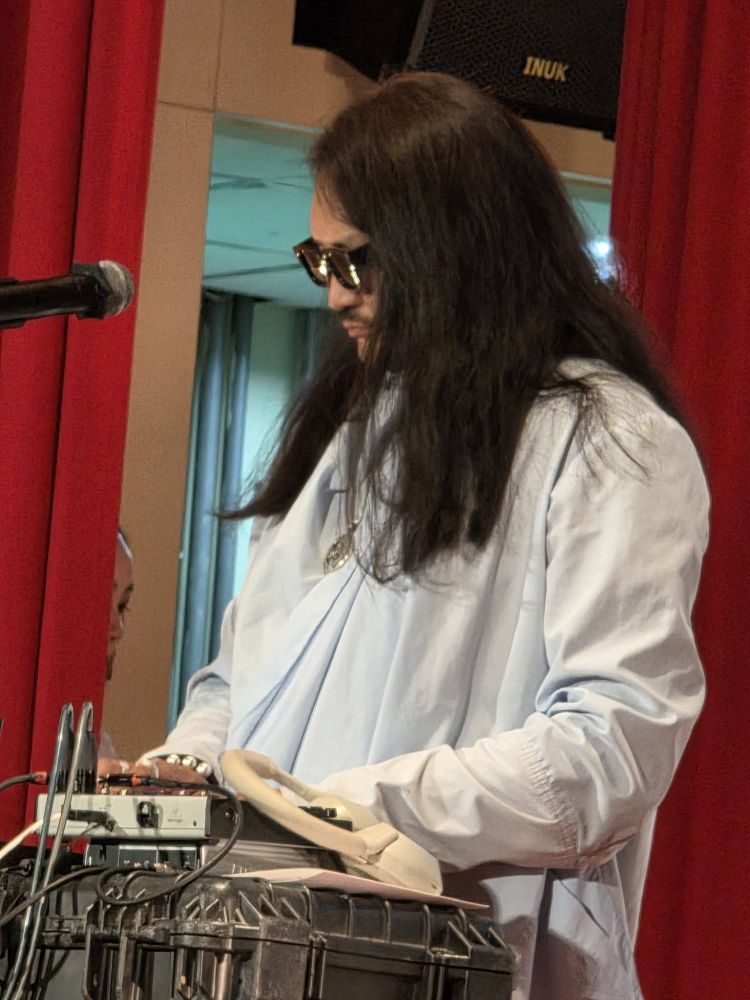
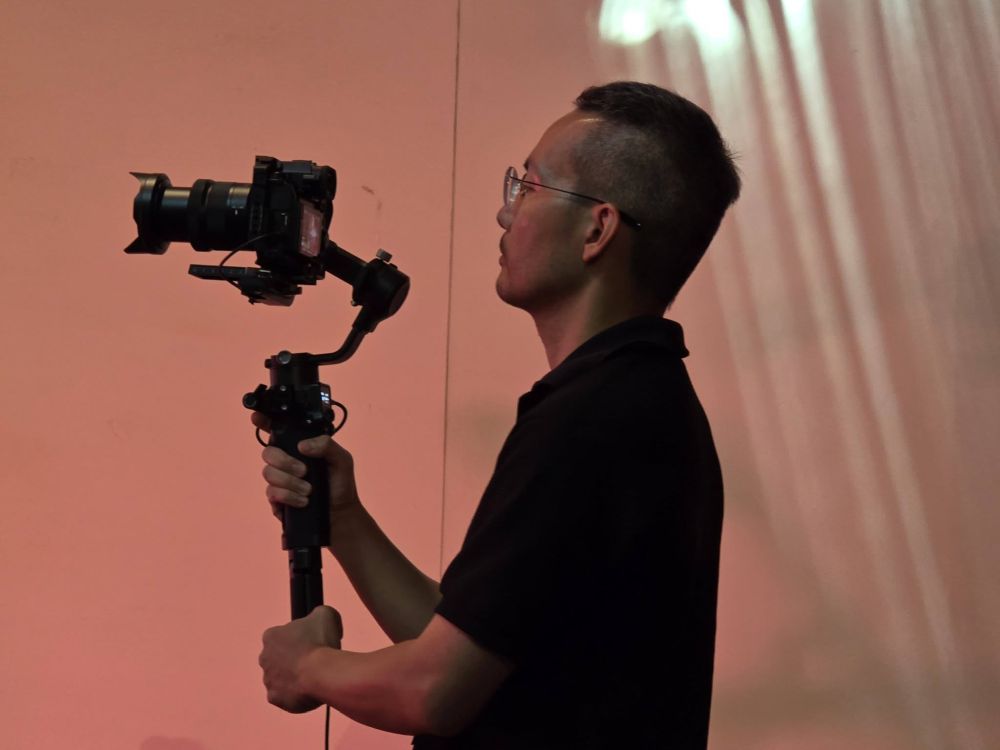
Last Monday evening’s, “Mongol Commemorative Concert” was a celebration and musical journey through Mongolia’s rich and diverse cultural landscape. It was also a special opportunity for us from Tsengun Enkhbold (王振功 – Digital Creator, National University) , and for the audience and invited guests to experience a well-designed program filled with musical moments and tributes from Mongolian history, literature, poetry, dance, ancient and modern folk songs all performed by professional musicians.
Mongolian folk songs have distinct styles, the “Long Song”, the “Short Song” and “Throat Singing”, which signify unique cultural significance. The “Urtiin Duu”, (Long Song) is recognized as one of the world’s most sophisticated vocal forms. It uses lyrical chant featuring falsetto, an extensive range and vocal embellishments or “ornaments” to enhance the liveliness or reality of a piece.
Additional styles include the “Bogino Duu”, (Short Song), songs that have a fixed tempo and lyrics that focus on themes of daily life, love, humor or historical narratives and the “Khoomei” (Throat Singing), an ancient tradition where the singer produces a low humming drone, while simultaneously singing higher overtones. Throat singing is used to mimic nature’s sounds of wind across the rolling grassland, bubbling streams, and the vastness of the Mongolian landscape.
Folk songs are the heart of the ancient Mongolian nomadic pastoral culture. Their narratives help connect communities with their ancestors’ tribal histories and the ongoing sacred spiritual Sky and Earth connection and joyful celebrations associated with “Tengrism” or ”Mongolian Shamanism”.
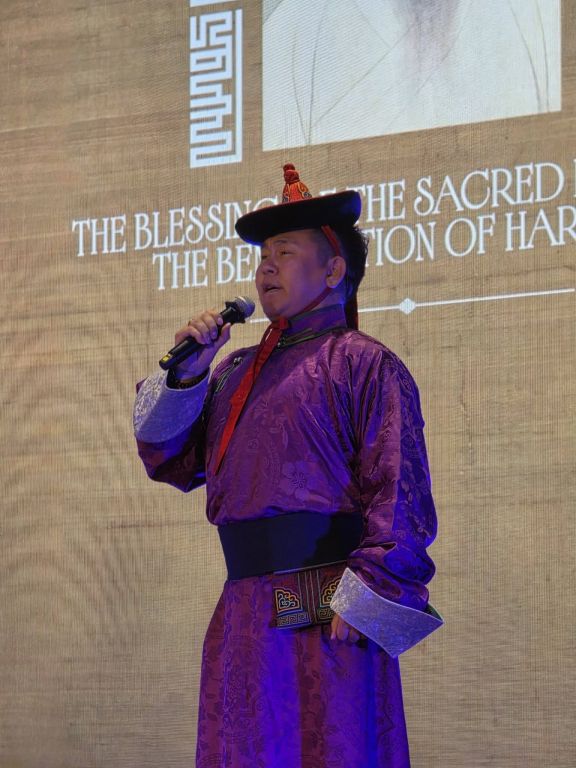
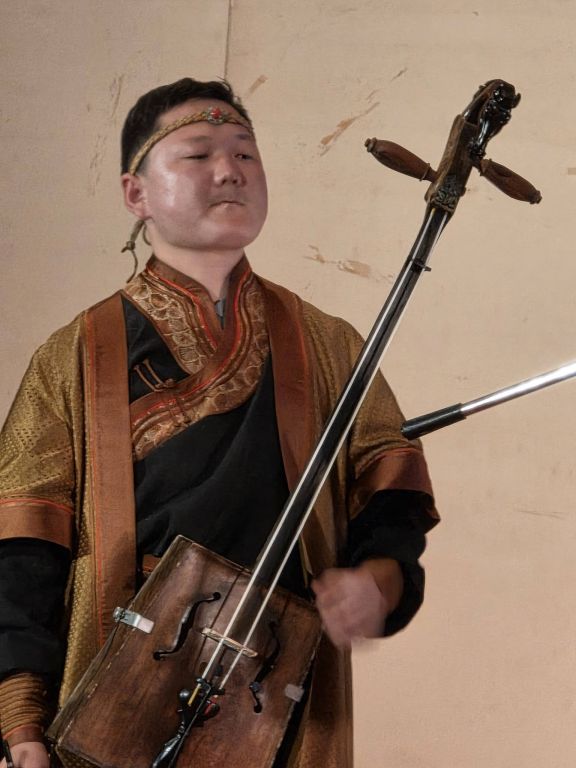
The Ulaanbaatar Theatre began the evening’s program with a “Morin Khuur Performance and Khoomei” with Mongolia’s traditional horse head fiddle accompanied by “Khoomei”, the art of throat singing.
The Ulaanbaatar Theatre, under the Ulaanbaatar City Government, is dedicated to preserving, promoting and passing on Mongolia’s traditional cultural heritage through performances of “Long Songs”, folk songs, “Khoomei” (Throat Singing) and traditional dance.
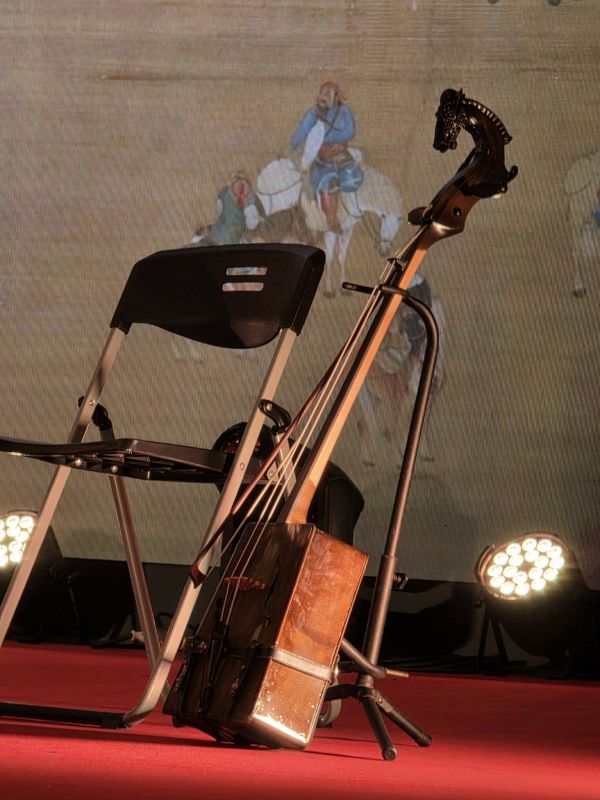
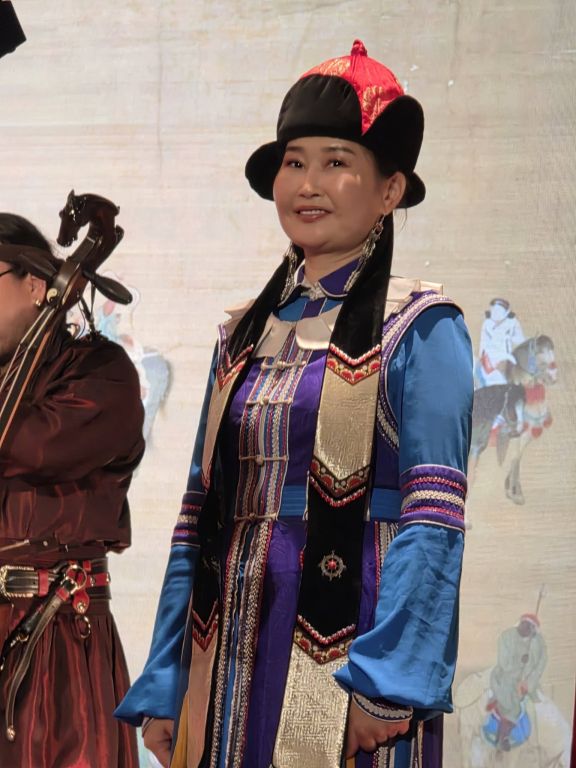
Leading us in songs of joy and celebration with “Hurrah Hurrah, a celebration of the Mongolian tradition of raising both hands, turning clockwise toward the sun and joyfully calling out “Hurrah”, to invoke health, prosperity and happiness.
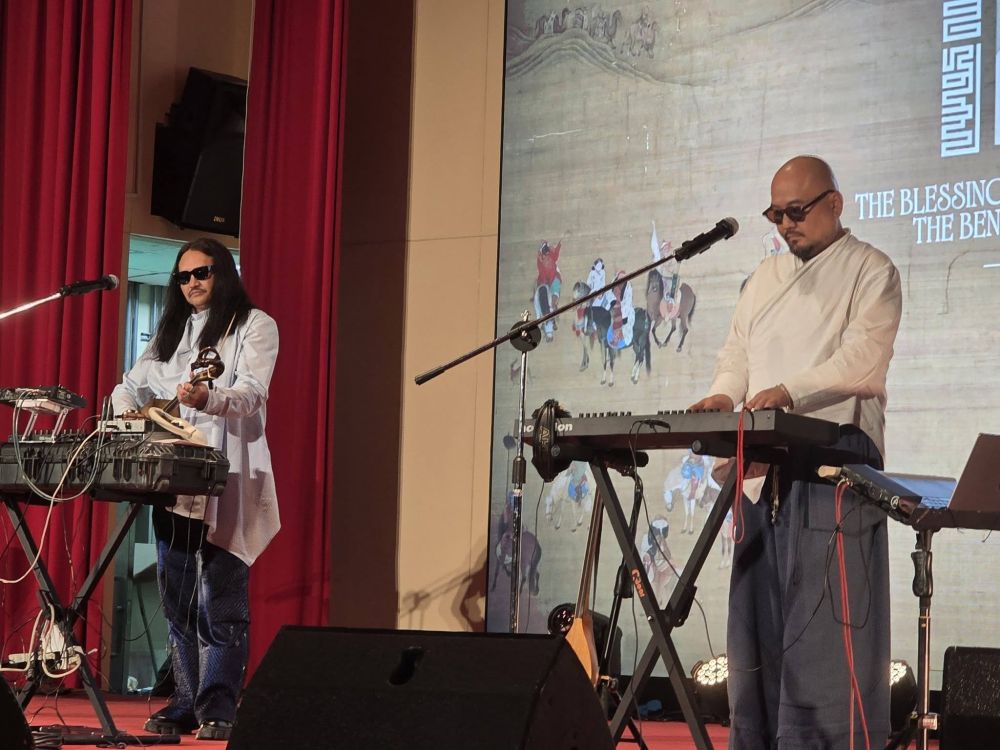
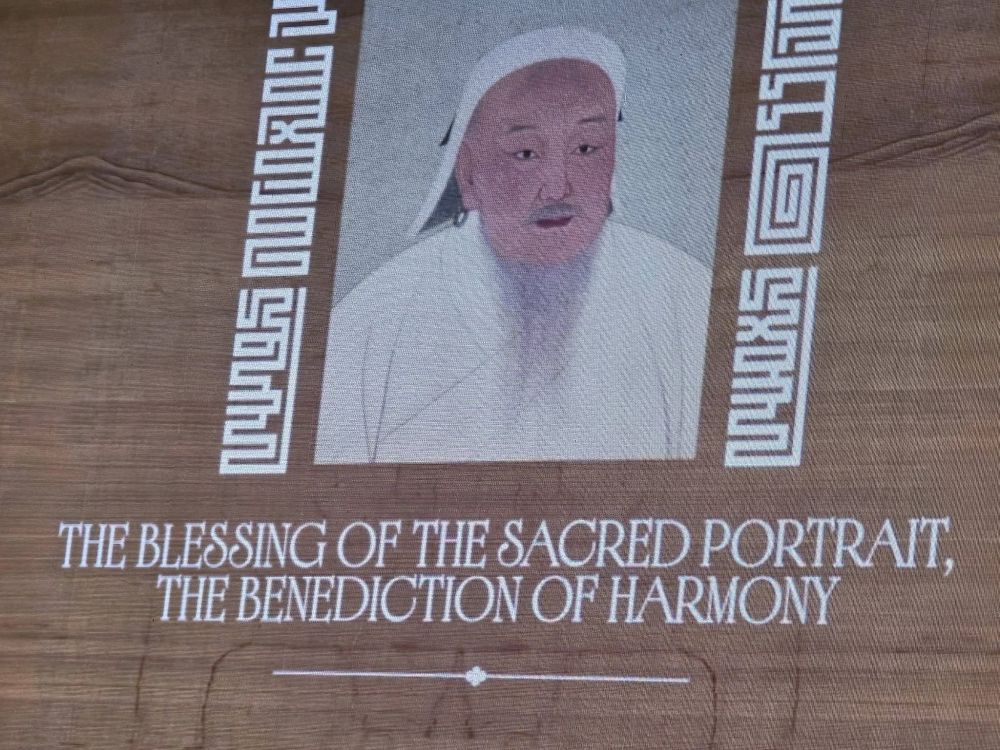
An 820 anniversary marking the historic found of the Mongol Empire. The National Palace Museum will display its famous “Chinggis Khan”, Genghis Khan portrait in an upcoming new exhibition.
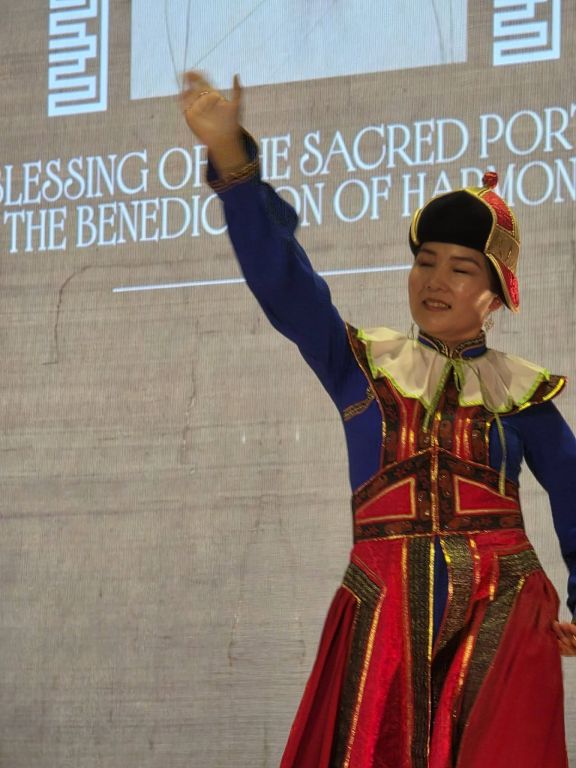
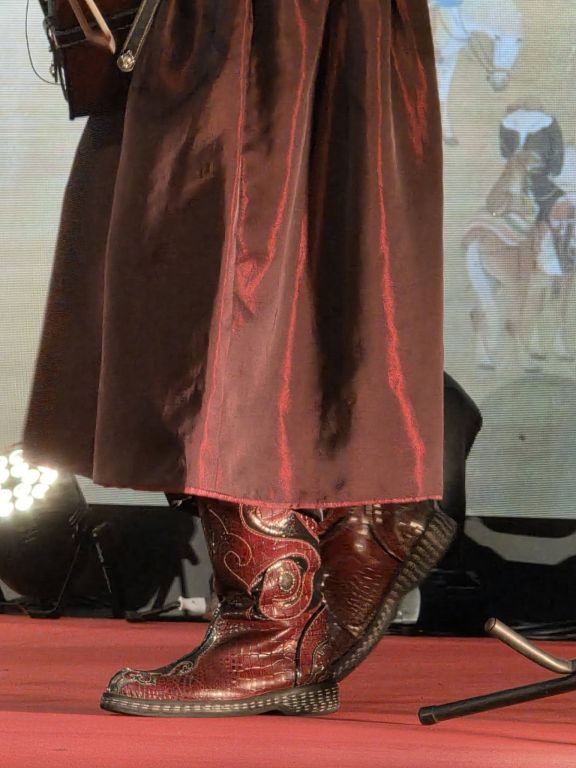
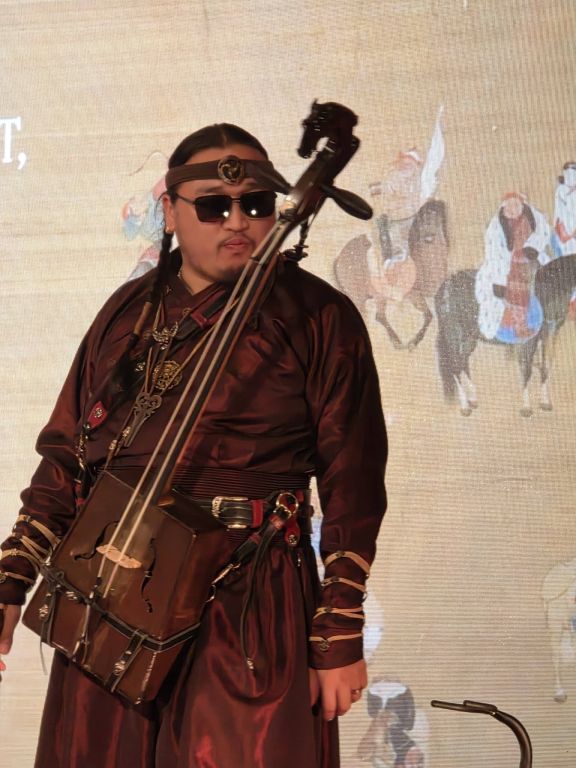
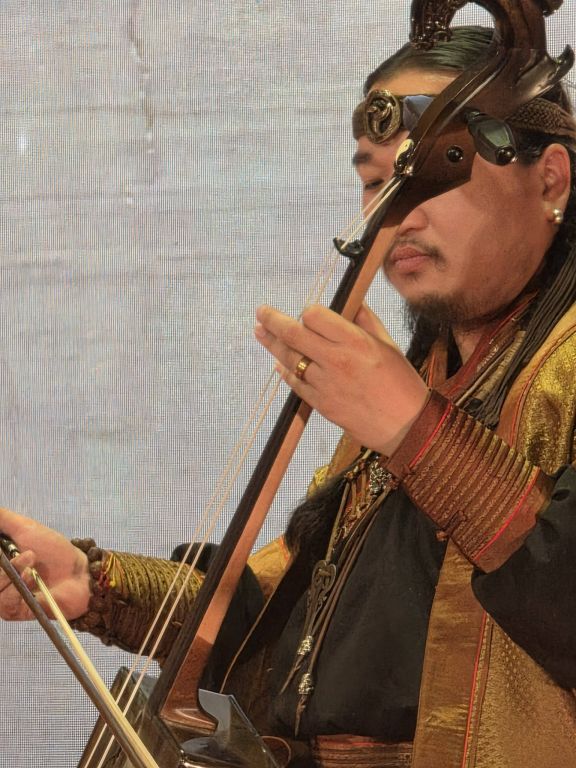
Throughout the Ulaanbaatar Theatre and the Delkhii Band’s performances, folk songs reflected Mongolians deep respect and love of nature and blended spiritual traditions of Tibetan Buddhism and Shamanism.
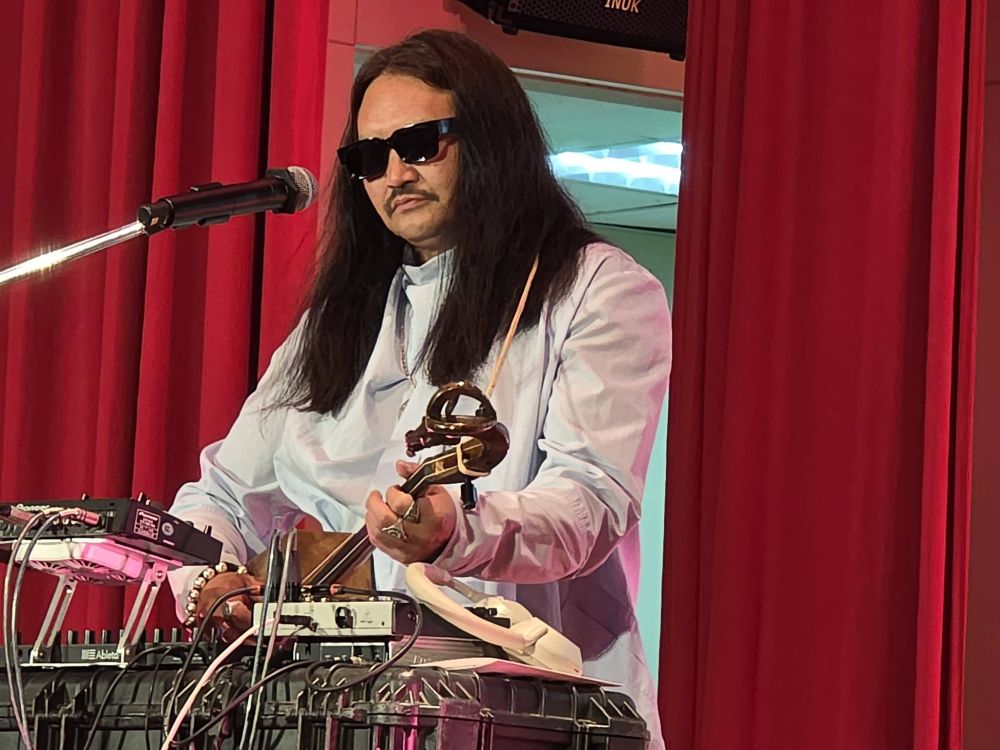
“Lord of the Land” a musical offering to the guardian spirits protecting the mountains, rivers and landscapes from “Eternal Heaven” and “Mother Nature” was performed by the Delkhii Band.
Traditional female Mongolian vocalists often perform using Khoomi (throat singing) showcasing their mastery of deep overtones and traditional vocal styles.
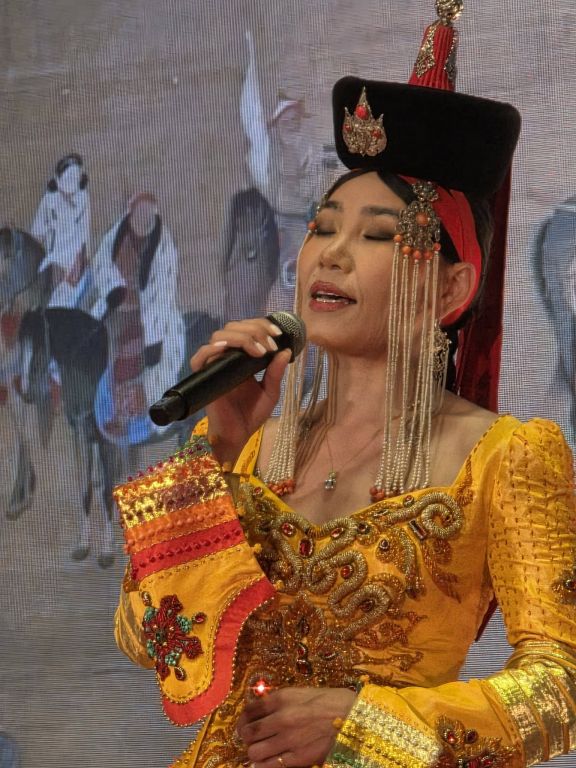
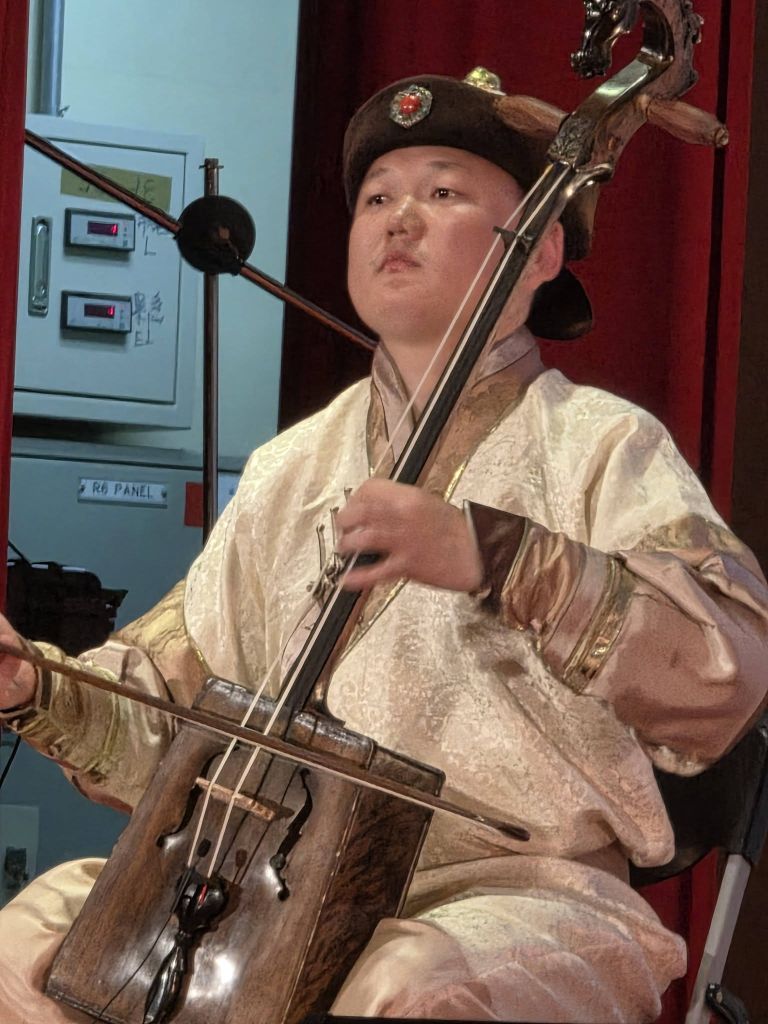
An energetic high energy fusion of “imagery” and tradition
using a Mongolian circular shamanic frame drum…representing the sun and moon and a “Mongolian long flute” to
mimic the sweeping sounds of wind blowing through the grasslands.
Images and Texts by Sue Babcock (unless specified images)